The One Thing I Wish I’d Told Small Business Owners About Marketing a Year Ago
About a year ago, I shared a post from a former coworker and good friend, Michal Linehan that asked a deceptively simple question:
Can a small business still do its own marketing?
At the time, my answer was immediate and confident: of course they can.
Marketing has been my wheelhouse for decades. I’ve done it across industries, business sizes, and economic cycles. I’ve lived through wins and failures, watched trends rise and collapse, and compared what’s industry-specific with what’s universally true. From that vantage point, marketing feels learnable. Testable. Solvable.
But looking back, that answer came from my seat, not theirs.
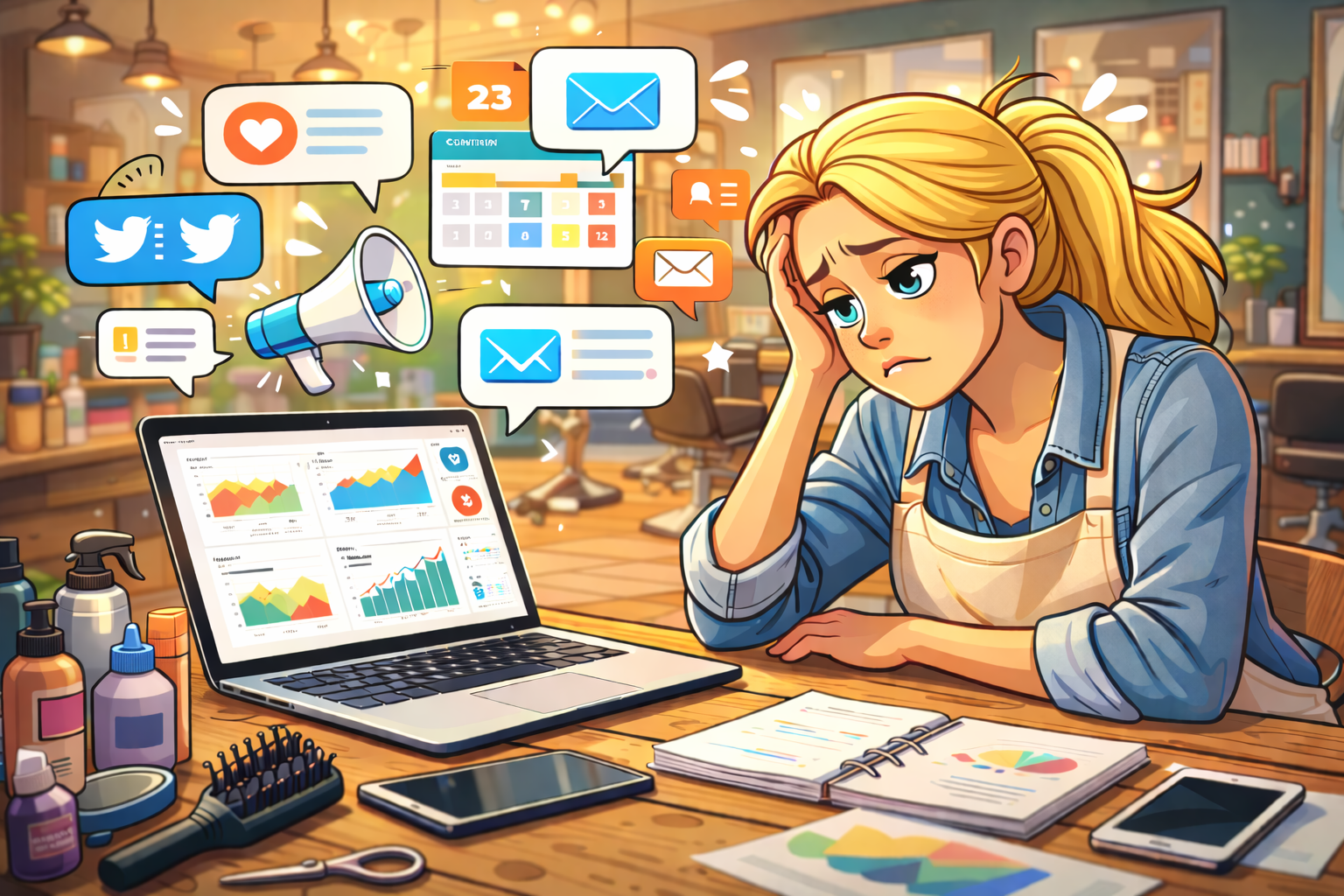
Most small business owners aren’t thinking about CTRs, attribution models, channel mix, or long-term brand equity. They’re in the trenches. They’re digging daily just to keep the business upright. Cash flow first. Customers second. Everything else—if there’s time.
So the real question isn’t can a small business do its own marketing.
It’s whether they should—especially heading into 2026.
The Reality on the Ground (Not the Theory)
Let’s talk data—not to impress, but to be honest.
• A significant portion of small businesses—over half in recent surveys—spend less than $1,000 per month on marketing.
That’s not strategy money. That’s survival money.
• Most small businesses allocate around 7–10% of revenue to marketing (with the 2025 benchmark averaging 7.7% across companies), and plenty fall well below that.
For a $500k business, that’s roughly $3,000–$4,000 a month total—before tools, ads, or labor.
• Advertising alone often eats up a big chunk; averages hover around $78k per year for businesses that actively advertise, but many smaller operations are scraping by on far less—meaning owners are already “doing marketing” without much margin for error.
And here’s the part that gets glossed over:
Most small businesses don’t have a marketer.
No full-time role. No part-time strategist. Just the owner—already wearing six other hats.
“Then I’ll Just Hire a Marketer”
In theory, that sounds reasonable.
In practice, it’s expensive.
By 2026, hiring a capable in-house marketer typically means:
- $70k–$100k+ base salary (depending on location, experience, and scope)
- Benefits, taxes, onboarding, ramp-up time
- And still… one person trying to cover strategy, content, analytics, ads, and brand
That’s a big bet for a small business—especially when marketing mistakes don’t show up immediately. They compound quietly.
What Agencies Actually Do (When They’re Doing It Well)
Good agencies aren’t just posting content or running ads. At their best, they provide five things most owners struggle to sustain on their own:
- Strategic prioritization (what not to do matters more than what to do)
- Cross-channel consistency (brand doesn’t fracture across platforms)
- Measurement and adjustment (decisions based on signal, not noise)
- Pattern recognition (they see problems before they show up in revenue)
- Bandwidth relief (the owner stops carrying marketing cognitively)
That’s the upside.
But agencies also create distance. They can dilute voice. And for many small businesses, even a modest retainer competes directly with payroll or inventory.
What Small Business Owners Can Do Themselves
This is where the conversation usually breaks down into extremes. So let’s stay grounded.
Small business owners can and should own:
- Their story and positioning
- Their customer conversations
- Their local presence
- Their values and tone
- Their decision-making authority
They can also realistically handle:
- Basic social presence and engagement
- Simple email communication
- Google Business Profile and local visibility
- Website updates and foundational SEO
These things matter. They build trust. They keep the business human.
But they are inputs, not a system.
The AI Complication (and Opportunity)
AI didn’t simplify marketing.
It accelerated it.
The tools are easier.
The choices are harder.
And the cost of choosing wrong for six months is higher than it’s ever been.
AI can help a small business execute faster—but it can’t decide:
- What deserves attention
- What aligns with long-term goals
- What should be ignored entirely
That still requires judgment.
So… Should a Small Business Do Its Own Marketing in 2026?
Here’s the honest answer I wish I’d given a year ago:
A small business should own its marketing direction—but it shouldn’t carry the entire marketing burden alone.
Doing everything yourself leads to burnout and scattered effort.
Outsourcing everything leads to detachment and wasted spend.
The middle ground—the sustainable one—looks like this:
- Clear priorities
- Fewer channels, chosen intentionally
- Simple, repeatable systems
- AI used to reduce friction, not create noise
- Outside perspective where decisions matter most
Marketing in 2026 isn’t about becoming a marketer.
It’s about becoming clear enough that marketing stops feeling overwhelming.
And clarity isn’t something you hustle into.
It’s something you design—slowly, deliberately, with your hands in the soil.
About the Author
Andrew Bloo is a business owner and leadership practitioner who has learned most of what he knows about leadership the hard way—through mistakes, overconfidence, and seasons where momentum quietly slipped away. He created the HITSLeadership™ framework to give leaders practical tools he wishes he’d had sooner—tools designed to help overwhelmed leaders slow down, regain clarity, and move forward with intention when things get messy.
#SmallBusiness #Entrepreneurship #Marketing #SmallBusinessMarketing #HITSLeadershipMarketing