The Lost Art of Creative Conflict
Way back at the dawn of time—the late ’90s—I worked for a former Intel engineer.
He saw something in me before I saw it myself.
I was a wild-eyed, anti-authority creative. Entrepreneurial. Obsessed with marketing. I had an eye for sellable design (not the same thing as beautiful design—but more on that another time). I was hired as a marketing manager, then a producer, and eventually—somehow—as a co-creator alongside the engineering team.
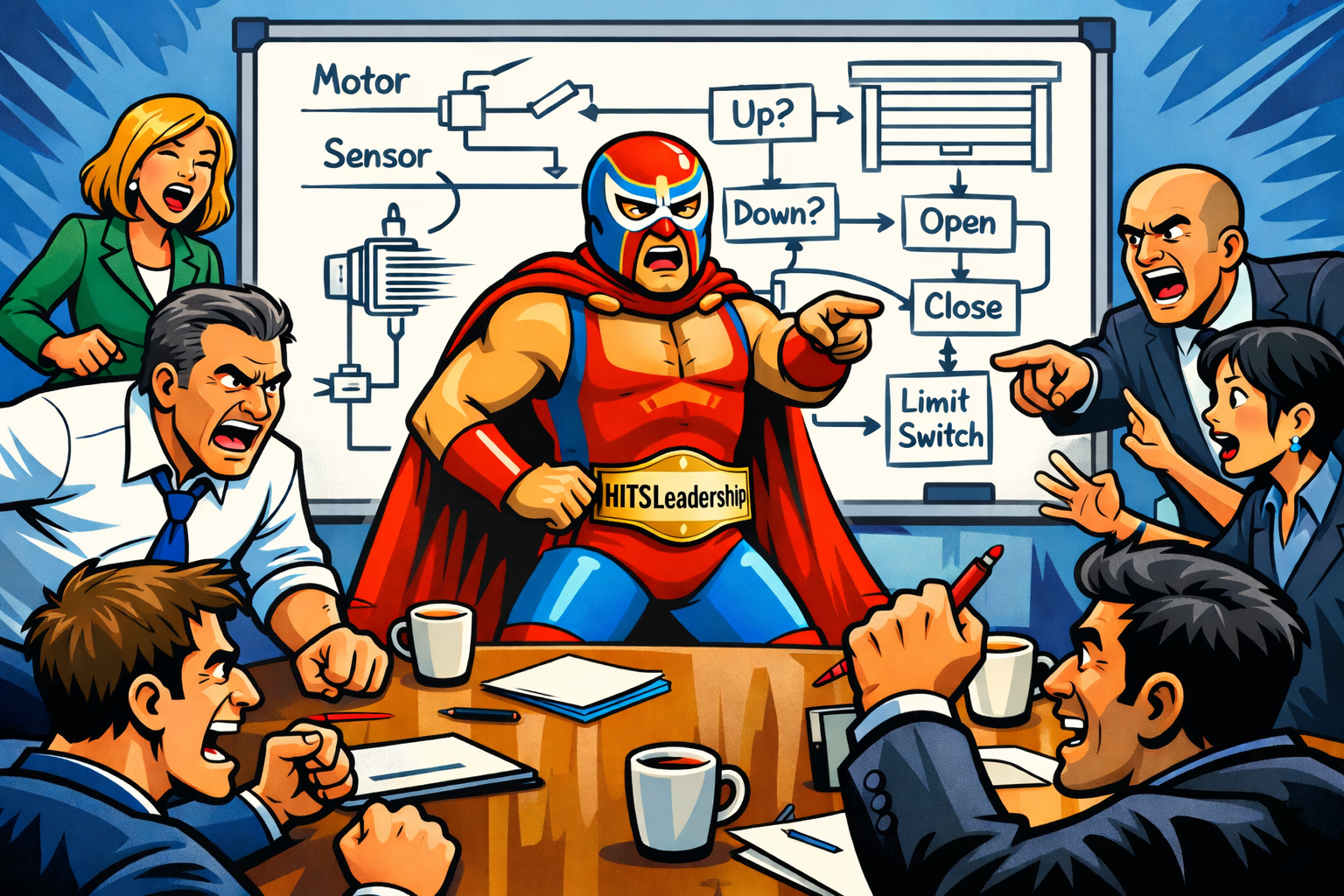
Which is how I found myself, one morning, walking into a meeting and being asked to design the logic for an automatic garage door opener.
I remember taking a slow gulp of coffee and thinking:
Do they know I interviewed for a marketing job?
I paused and asked, “Do you want me to explain it, or map it out on the whiteboard?”
My boss smirked, handed me a black and red dry-erase marker, and said, “Lay it out.”
So I did.
I mapped the logic. Added circuit decision points. Built a loop to determine whether the door was starting at the top or bottom of its travel. Basic control logic—but clean, coherent, and intentional.
When I finished, I put the markers back in the tray and returned to my seat, quietly impressed with myself.
That’s when my boss stood up, erased the entire board, and said something I’ll never forget:
“We practice creative conflict here. Since you understand first-grade-level engineering, we can get started.”
And just like that, the real meeting began.
The Part No One Warns You About
What I didn’t realize in that moment—standing there, feeling pretty good about myself—was that I hadn’t won anything.
I had just earned a seat in the cage.
Once my ego hit the floor, I got a first-person view of what real creative conflict looked like inside that room.
Not brainstorming.
Not collaboration theater.
This was brain-to-brain, full-contact mental MMA.
Ideas didn’t get shared.
They got pressure-tested.
Every assumption was fair game.
Every shortcut was exposed.
Every weak link was grabbed and twisted until it either snapped—or proved it could hold.
No one cared who brought the idea.
Only whether it survived the room.
That was the moment I understood:
The whiteboard exercise wasn’t the test.
The conflict was.
That day shifted my anti-authority streak from rebellion to respect for rigorous debate. It was the first crack in building beliefs around structured conflict over chaos.
What Creative Conflict Actually Is
Creative conflict isn’t arguing for sport.
It isn’t ego.
And it definitely isn’t chaos.
It’s the shared understanding that if you’re going to bring an idea into the room, you’d better bring the conviction to carry it.
That meant showing up having already lost sleep over the idea.
Having run the scenarios.
Having thought through the tradeoffs.
Knowing where it could break—and why it might still be worth it.
And then being willing to defend it against a room full of equally sharp, equally invested people doing the exact same thing.
This wasn’t polite brainstorming.
It was deliberate friction in service of better outcomes.
Ten ideas would enter the room.
One—maybe two—would survive.
The rest didn’t fail because the people were wrong.
They failed because the idea couldn’t hold up under pressure.
And if your idea didn’t make the cut?
You didn’t disengage.
You didn’t take it personally.
You applied that same intensity to whatever did survive.
Because the goal was never to win the room.
The goal was to make the product better.
Why I Don’t Tell This Story for Nostalgia
I don’t tell this story because I’m romantic about the late ’90s.
And I’m not interested in becoming the guy who used to do interesting work.
The point isn’t the garage door opener.
It’s the pattern that followed me everywhere after.
I’ve watched the same breakdown happen in:
- Engineering teams shipping real products, prototyping hardware under impossible deadlines
- Marketing teams under relentless revenue pressure, where unvetted campaigns could tank quarters
- Executive rooms making high-stakes decisions, debating pivots that affected livelihoods
- Small business owners buried in daily chaos, juggling operations without formal structure
Different environments.
Same failure mode.
When teams lose the ability to challenge ideas cleanly, everything slows down.
Decision quality drops.
Ownership blurs.
And people either dominate the room—or disappear from it.
This isn’t an intelligence problem.
It’s a structure problem.
From Experience to System
HITSLeadership didn’t come from a single insight or a clever model.
It came from years of watching what actually works when:
- Time is limited
- Pressure is real
- Outcomes matter
- And complexity can’t be wished away
The teams that performed best weren’t louder.
They weren’t nicer.
They weren’t more inspirational.
They were clearer.
They relied on simple, repeatable structure—not personality or heroics.
Structure that:
- Made tension productive instead of toxic
- Allowed disagreement without dysfunction
- Kept decisions visible
- Helped teams move forward even when things weren’t perfect
That’s what HITSLeadership is.
Not theory.
Not nostalgia.
A distillation.
Why This Matters Now
We live in a moment where:
- Meetings are safer but less useful
- Feedback is softer but less honest
- Leaders are expected to move fast without creating friction
That combination doesn’t scale.
Creative conflict didn’t disappear because it stopped working.
It disappeared because leaders stopped being taught how to hold it.
Without structure, conflict turns personal.
Without conflict, structure becomes meaningless.
HITSLeadership exists to restore that balance—without turning organizations into pressure cookers or personality contests.
Where This Becomes Practical
This is exactly why the HITSLeadership™ 20-Minute Reset exists.
Not as another framework to admire—but as a simple, repeatable way to reintroduce clarity and productive tension into real leadership moments. In twenty focused minutes, leaders step out of reaction mode, surface what’s actually happening, and create just enough structure for honest disagreement to do its job—without derailing the team or draining momentum.
It’s the modern, portable version of what that Intel engineer built into the room all those years ago.
No theatrics.
No nostalgia.
Just something that works.
Ready to put it into practice?
Check out the 20-Minute Reset at hitsleadership.com—built from these very lessons, designed for the environment you’re leading in today.
About the Author
Andrew Bloo is the creator of HITSLeadership™, a practical leadership system designed to help leaders cut through chaos, make better decisions, and build teams that actually work. His approach is shaped by decades of experience spanning engineering-adjacent product teams, marketing and revenue leadership, executive decision-making, and small business operations—often under real pressure, not ideal conditions.
Andrew focuses on simple structure over theory, clarity over charisma, and tools that work across environments. He writes about leadership, decision-making, and organizational friction for leaders who are tired of frameworks that sound good but fall apart in practice.
Learn more at hitsleadership.com.