AI: Some Kind of Wonderful… or Just Static on a Monitor.
There’s a quiet question a lot of us Gen Xers are asking right now.
We built the digital world. Wired it together when nothing worked right, survived the crashes, rebuilt again, and again and again. We weren’t born into tech—we were excitedly forced into it and then made it all work.
And now AI shows up, promising to handle the stuff we’ve spent decades getting good at. The analysis, the summaries, the forecasting. Faster. Cheaper. No coffee breaks. No two week vacations every year.
The doubt creeps in: Did we just engineer our own exit?
One side feels like Some Kind of Wonderful—that underdog payoff where the outsider figures out their own value, no permission needed. Leather jackets, alternative edge, seeing what’s real when everyone else chases the hype. AI could be that: the ultimate tool for people who’ve already learned to spot the hype and build anyway.
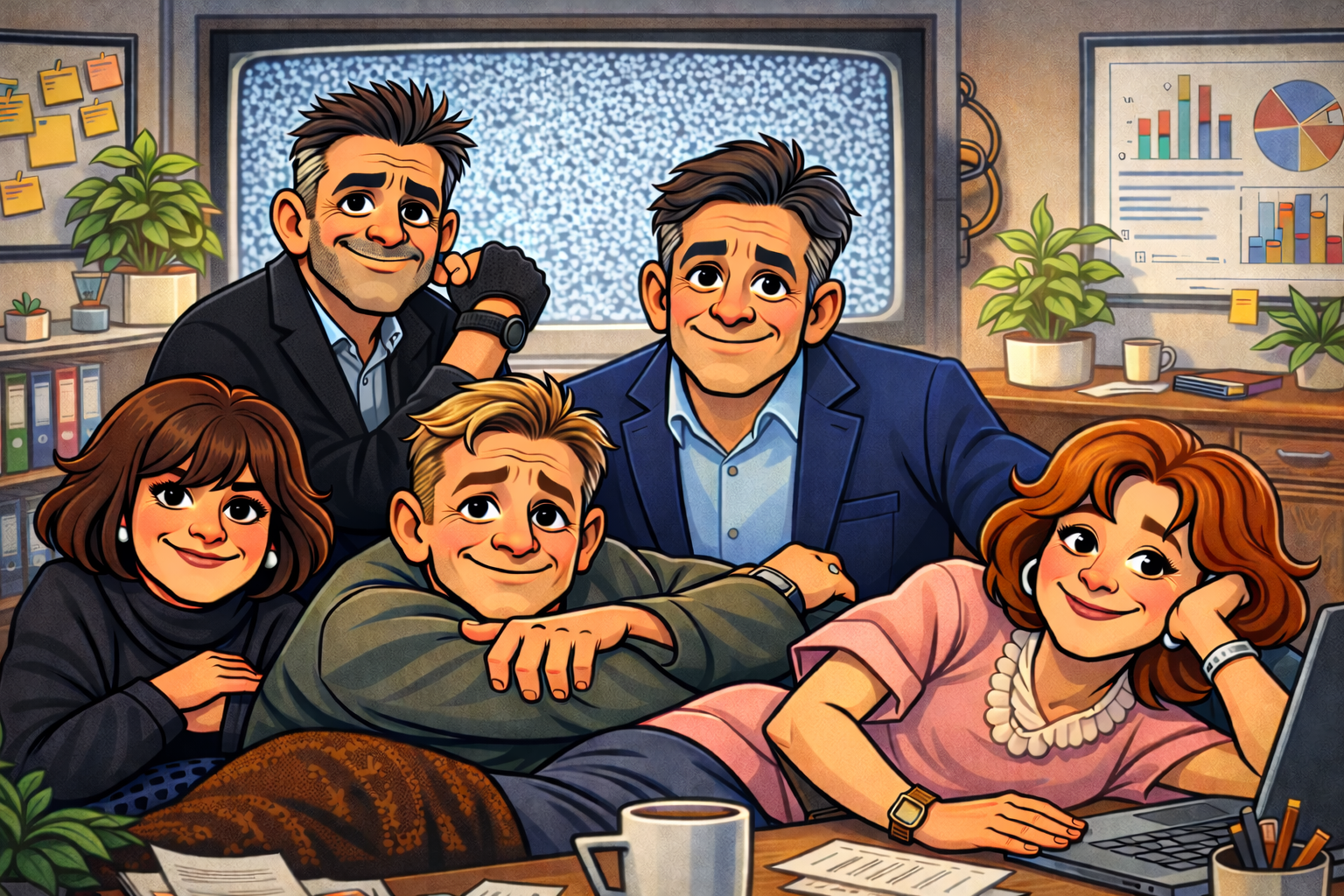
The other side is pure Poltergeist. Remember the opening? Family asleep, TV humming after sign-off, static snow filling the screen… “They’re heeeeeere.” What started as background noise became something reaching in—through the screen we trusted—to take the hard earned value we earned.
AI arrives the same way: a happy and helpful paperclip in your word document, a report that partially writes itself. At first it’s magic. But the static is there. Is this the crackle before the clown?
The Bridge Generation
We grew up analog—mix tapes, a quarter in our pocket and the dewy decimal system— it was alll we needed. Then we jumped into digital just as it started reshaping everything.
We built the first real websites
Fought through dot-com busts
Navigated 2008
Adapted to SaaS.
We’ve seen hype rise and fall more than once – Psyon, Blackberry, Newtons and more!
We’re not AI natives.
We’re translators.
We know both worlds.
And right now, that matters.
Data shows the adoption split: Gen Z and younger Millennials are at 70–80%+ daily AI use. Gen X sits around 60%. But once people start, the productivity lift looks similar across ages. The real edge isn’t who learns the prompts fastest—it’s the ones who knows what to do with the answer and WHY.
My Own Path
Mine hasn’t been a straight line.
- Art Director when LPI and PPI were an actual thing and Photoshop was at version 1.1 and optical film type setting was still part of the curriculum.
- Marketing Specialist as digital took over and Macromedia Director gave us heroic animation skills.
- CEO, fractional CMO, hired and fired, rebuilt in the years following “Boxed software” at Egghead and Frys.
- Stay-at-home dad, small farm owner and exploring the nexus between sustainability and profitable farming practices in small family run ag operations.
- Cancer survivor. My prayers to all of those who have or are on this journey its not easy but know God is good all the time.
Back in leadership with clearer eyes and a multi-year study of AI under my belt.
Every shift felt like my own personal Breakfast Club—where I looked in the mirror and tried to figure out if I was the popular self-doubting jock, the dweeb from chess club, the trend-following cheerleader for the cause, or the rebel who once again was going to try and buck the system.
None of it was planned. Most felt like total identity disruption in the moment. And none of it felt rad!
What carried over wasn’t the tools or titles. It was pattern recognition—the mental scars from watching systems break, from boardrooms where optimism met reality, from picking up the pieces over and over again and starting to build again. Thank you, Legos, for this life lesson.
AI is killer at answers. It’s still blind to long-term cost, to the weight of a bad call five years out. It didn’t live through 2001 or 2008. We did. That memory isn’t nostalgia—it’s leverage.
Operator or Architect?
If we compete on speed, novelty, or trend-chasing, we lose. That’s not our game anymore.
But shift to architect—designing the system, weighing second- and third-order effects, coaching mixed-age teams, translating between fast tech and steady organization—and everything changes.
AI amplifies decisions. Amplified judgment without maturity creates fragility. With it? Resilience at scale.
The Real Question
Not “Will AI replace us?”
But “Will we reposition fast enough to make AI our multiplier?”
We’ve survived analog dying, digital exploding, multiple economic gut punches. We know what breaks when things move too fast. Paired with AI, that’s solid gold.
We just have to learn again. Adapt again. Let go of old identities again.
We’ve done it before.
From latchkey kids who built the digital world to the ones who can now shape what’s next.
AI isn’t the end.
It’s another shift.
And we’ve handled those.
What about you—is AI feeling more like the payoff in Some Kind of Wonderful right now… or the first static before the clown shows up? Drop your take below.
About the Author
Andrew Bloo is a leadership consultant and the creator of the HITSLeadership™ framework. He works with founders, executives, and operators who are tired of reactive leadership and burnout-driven culture, helping them build clarity, steadiness, and trust through practical leadership systems. Andrew focuses on leadership under real pressure — when decisions are messy, people are human, and presence matters more than polish.
Authentic Growth, Career Stories, Marketing Truth, Thought Leadership