Why Cancer Was Good for My Career
(But Not My Financial Statement)
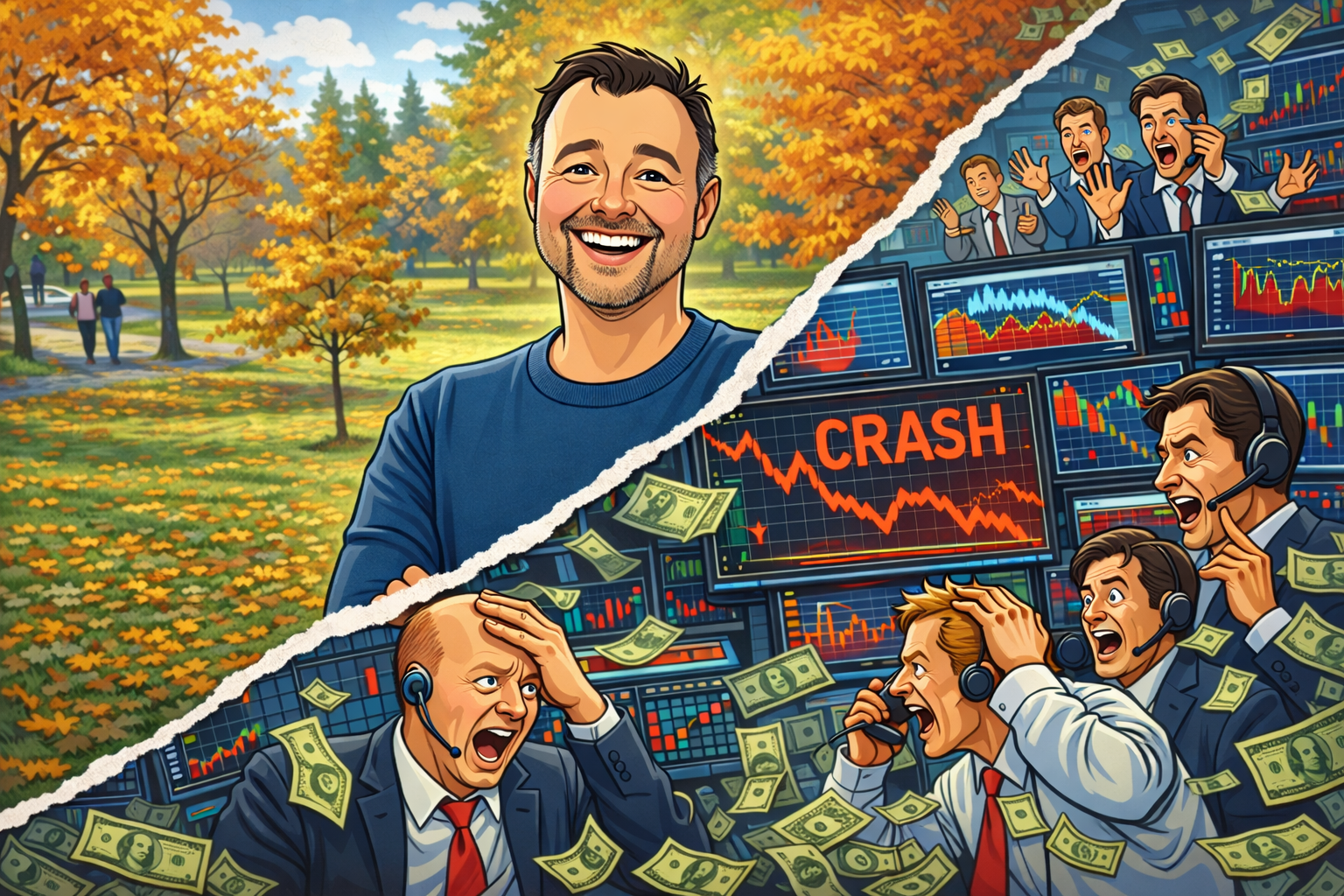
Most people don’t separate career success from financial success. We treat them as if they’re locked together – emotionally synced – where one validates the other. Earn more, you must be winning. Advance faster, you must be doing something right. Fall behind financially, and suddenly your career feels like it’s failing too.
A life-threatening diagnosis breaks that bond.
Not gently. Not philosophically. It snaps it clean in half.
Things that once felt equivalent—status, income, momentum—suddenly reveal themselves as wildly different animals. Financial struggle becomes intensely personal. Private. Isolating. Career success, on the other hand, reveals itself as communal. Shared. Dependent on trust, relationships, timing, and people carrying weight alongside you.
Even the most stubborn believer in pure self-determination has to admit this: career success may be described individually, but it’s measured collectively. It’s a lagging indicator of many people moving in some kind of alignment. Yes, exceptions exist. And yes, some will call this premise absurd.
To them, I’d simply say: I hear you and I genuinely hope you never experience the grounding force of a major, life-threatening diagnosis. Being forcefully sidelined from your own momentum by something invisible, relentless, and profoundly unconcerned with your plans. Something stronger, smarter, and more motivated than you will ever be.
For everyone else—thank you for being here.
A career isn’t just a scorecard. It’s a reflection of who you are to other people. As a collaborator. A leader. Sometimes a stabilizing presence. Sometimes a parent-figure in rooms where people are quietly looking for direction. It’s not a bank account. It’s a reputation for how you show up when things are uncertain.
I thought I learned this lesson years ago when I stepped away from my career to farm—or more accurately, to grow hops here in beautiful Central Oregon.
That season dismantled the idea of an invisible corporate ladder. There was no upward climb, only patience. Soil. Weather. Timing. Effort with no immediate feedback. Success wasn’t measured quarterly; it was measured by whether tiny plants climbed seventeen-foot trellis lines, inch by inch, across thousands of bines (not vines… it matters).
Day after day, progress was physical. Tangible. Unimpressed by ambition. The bank account felt so detached from the work that it barely registered connected only by the thin conceptual thread that eventually one might justify the other.
Cancer forced that lesson deeper.
It removed my ability to confuse motion with progress. It sidelined me at moments when I was most convinced I was needed. And in doing so, it clarified something I’d missed: being forced out of the game doesn’t erase your career—it reveals which parts of it were real.
Cancer was terrible for my finances.
No reframing fixes that.
But it was oddly generous to my career.
It stripped away urgency theater. It exposed how much of what we call “success” is really just momentum masquerading as meaning. It forced me to sit still long enough to notice patterns I’d been circling for years but never slowed down enough to see.
What held during that season wasn’t hustle or output. It was judgment. Presence. The ability to see what actually mattered when I couldn’t act on everything at once. That clarity didn’t arrive because I worked harder—it arrived because I was forced to stop.
That’s where the thinking behind HITSLeadership truly took shape.
Not as a framework I was trying to build, but as a realization I couldn’t ignore.
You can’t will a plant to grow.
You can’t muscle your way to health.
And you can’t brute-force your way to sustainable leadership.
I’d learned that once before, standing in a hop field watching bines climb toward the sun inch by inch. Cancer re-taught it at a deeper level. It made something obvious: leadership doesn’t improve when you push harder it improves when you finally see clearly. And clarity rarely shows up while you’re in constant motion.
That’s why the HITSLeadership™ 20-Minute Reset exists.
Not as a productivity tool. Not as a fix. But as a forced timeout—an intentional pause designed to recreate, in a small and usable way, what life forced on me at a much higher cost.
Twenty minutes to stop reacting.
To observe instead of correct.
To notice what feels heavy instead of explaining it away.
To see what actually matters before taking the next step.
It’s not about doing less forever.
It’s about seeing better before doing anything at all.
Cancer took a lot from me.
But it gave me something I didn’t know I was missing: the ability to separate motion from meaning, urgency from importance, and success from noise.
Sometimes the pause is the progress.
And sometimes the most career-defining growth happens while you’re temporarily forced out of the game.
#Leadership #LeadershipDevelopment #FounderLife #BusinessLeadership #ResilientLeadership
Andrew Bloo is a founder, leadership strategist, and the creator of the HITSLeadership™ framework. His work focuses on helping business owners and leaders reduce reactivity, regain clarity, and lead with greater consistency—especially during periods of uncertainty and disruption. Drawing from decades of leadership experience, farming, and personal health challenges, Andrew’s approach emphasizes presence, judgment, and sustainable leadership over urgency and noise.